
Five years ago, a thirty-second product ad meant a camera crew, a studio day, an editor and a four-figure invoice. Today the same ad is a text prompt, a product photo and about three minutes of rendering time. This guide walks through the entire process — not the marketing version, the actual workflow — so you can go from idea to a published, scroll-stopping ad today.
Everything below works on ShortAd AI, but the principles apply to any serious AI video platform: the quality of your output is decided by the quality of your inputs, and the inputs are simpler than most people think.
Step 1 — Start with the product, not the script
The single biggest quality lever in AI video advertising is giving the model your actual product. A clear photo — front-facing, decent light, the label readable — anchors every frame the AI generates. Platforms that accept product photos will reproduce your real packaging, your real colors and your real branding instead of inventing a lookalike.
Take two or three photos: one clean front shot, one lifestyle angle (the product in a hand, on a table, next to its box), and one close-up of the label or texture. You will not always use all three, but the AI analyzer picks up details from each that make the final video feel authentic.
Step 2 — Let AI write the blueprint before you write the prompt
A common mistake is typing a one-line prompt like "make an ad for my protein powder" straight into a video model. Video models are cinematographers, not strategists — they need scene-level direction: what the camera does, what the person feels, when the product appears.
The better workflow is a two-step one. First, use an ad blueprint generator (ShortAd AI’s Script Generator does this for one credit): describe your product in one line, pick a duration and a frame size, attach your photos, and let it write a scene-by-scene plan — hook, shots with timings, a full voiceover script with emotional delivery notes, all composed for your chosen format. Then review it like a director: tighten the hook, swap a scene, adjust the call to action. Editing a strong draft takes two minutes; writing scene direction from scratch takes twenty.
Step 3 — The hook decides everything
On TikTok, Reels and Shorts, the average viewer decides in under three seconds whether to keep watching. Your first shot and first spoken line are the ad. Everything after them is only seen by people the hook already won.
Hooks that consistently perform: a bold question aimed at a pain point ("Still paying an agency for every video?"), an unexpected visual (the product doing something physically satisfying — a pour, a splash, a snap), and a hard contrast ("This ad cost $0.90 to make"). Avoid opening with your logo — nobody scrolls for logos.
Step 4 — Pick the format for the platform, not the other way around
Vertical 9:16 owns TikTok, Reels, Shorts and Stories. Wide 16:9 is for YouTube pre-roll and website embeds. Square 1:1 and portrait 4:5 still earn their place in Facebook and Instagram feeds, where they occupy more screen than 16:9 without requiring full-screen commitment.
Generate the vertical version first — it is where short-form ad spend concentrates — then re-render the same blueprint in other sizes if the campaign needs them. Re-rendering a proven creative into a second format costs a fraction of inventing a new one.
Step 5 — Give the voiceover real emotion
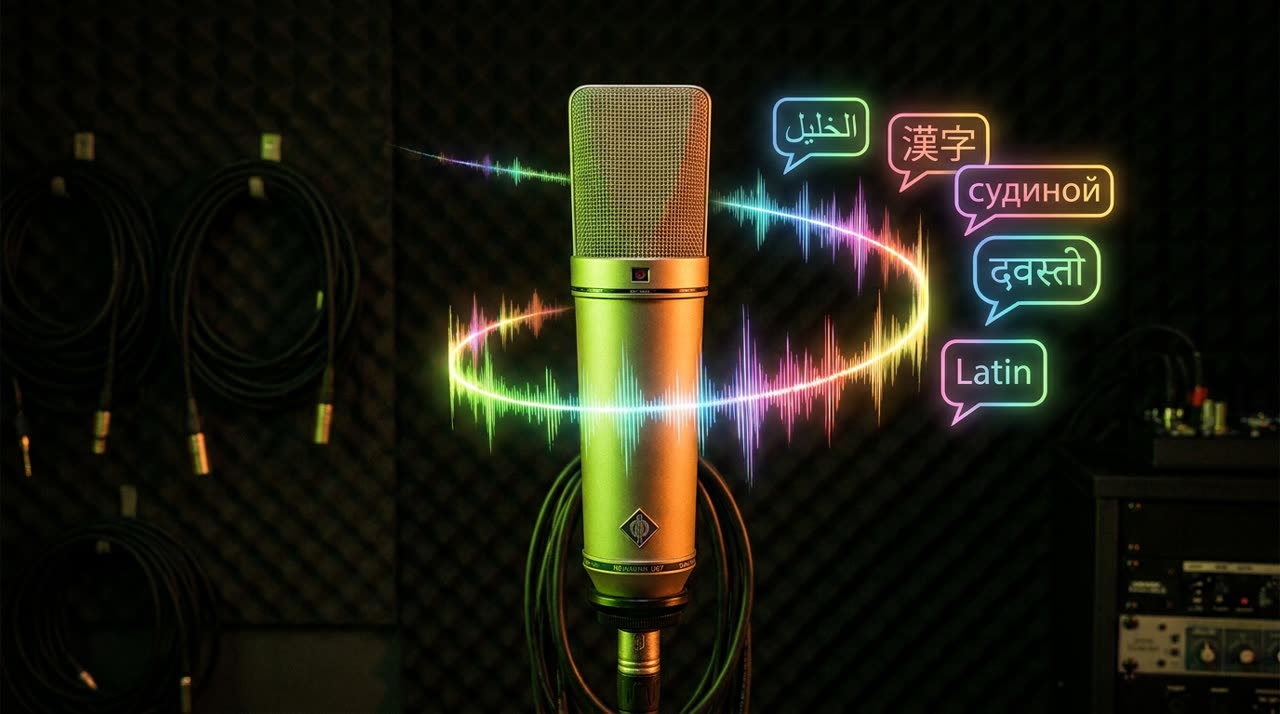
Flat narration is the most common tell of a cheap AI ad — and the easiest to fix. Modern voice models can act: excitement on the hook, warmth on the reassurance, confidence on the call to action. On ShortAd AI you write emotion tags directly into the script — [excited], [warm], [confident] — and the voice performs them.
Match the voice to the audience, not to your own taste. A Gen-Z skincare audience responds to a young, energetic delivery; a B2B software audience trusts a measured, assured one. And speak the customer’s language literally: with 70+ voiceover languages available, an ad in Bangla, Hindi, Spanish or Arabic consistently outperforms an English ad shown to a non-English audience.
Step 6 — Music under the voice, from the first second
Background music should start at 0:00 and sit underneath the voiceover — ducked to roughly a quarter of the voice’s volume — for the entire video. Music that only appears after the narration ends feels like a mistake, because it is one.
Pick energy that matches the script: upbeat electronic for launches and offers, warm acoustic for wellness and family products, cinematic percussion for premium positioning. If your platform can generate an original instrumental from a text prompt, use it — original music can never trigger a copyright claim on any platform.
Step 7 — Generate, review like a media buyer, iterate once
Render the ad, then watch it the way a stranger would: on your phone, with sound on, thumb hovering. Ask three questions. Did the first two seconds earn the third? Is the product unmistakably yours? Is the next step obvious?
If any answer is no, fix that one thing and re-render. AI generation is cheap enough that a second iteration costs less than a coffee — which is precisely the discipline traditional production never allowed. Two focused iterations beat ten unfocused generations.
What this costs in practice
On ShortAd AI, a ten-second product ad on the efficient model tier costs about 5 credits — roughly $0.50 on the $9 Basic plan, which covers around 18 such ads a month. A premium cinematic render with native audio costs more per second, and talking-presenter formats sit in between. The strategic point: at these prices, creative testing stops being a budget line and becomes a habit. Brands that test ten creatives a week beat brands that perfect one a month.
Great AI ads are not generated — they are directed. Bring a real product photo, let AI draft the blueprint, sharpen the hook yourself, give the voice real emotion, and iterate once. That workflow, run weekly, outperforms any single perfect ad.